AI Image Generators

Explore the best AI Image Generators — independent reviews, comparisons, pricing and step-by-step how-to guides, curated by Aizhi.

  • Cloem

    Cloem

    Cloem is a company based in Cannes, France, which applies natural language processing (NLP) technologies to assist patent applicants in creating variants of patent claims, called "cloems". According to the company, these "computer-generated claims can be published to keep potential competitors from attempting to file adjacent patent claims." == Technology == According to Cloem, dictionaries, ontologies and proprietary claim-drafting algorithms are used to draft alternative claims based on a client's original set of claims. In particular, the original set of claims is subject to various permutations and linguistic manipulations "by considering alternative definitions for terms as well as “synonyms, hyponyms, hyperonyms, meronyms, holonyms, and antonyms.”" == Possible uses == Cloem can optionally publish one or more created texts, as electronic publications or as paper-printed publications. These can potentially serve – through a defensive publication – as prior art to prevent another party for obtaining a patent on the subject-matter at stake. In other words, after an initial patent filing, an "improvement" patent (adjacent invention) can be applied for by another party, such as a competitor. By publishing variants of a patent claim, the risk of adverse patenting may potentially be decreased (improvement inventions may no longer be patentable). Cloems may also be potentially patentable. One of the issues of patentability, however, is that only a natural person can be a listed as an inventor on a patent. Since cloems are produced by a computer based on a person's input, it is not clear if the computer or the person is the inventor. The inventorship of Cloem texts is an open question.

    Read more →
  • Kdan Mobile

    Kdan Mobile

    Kdan Mobile Software Limited is a software application development company based in Tainan City, Taiwan. Kdan also has branches in Taipei, Changsha, Irvine, California, Japan, and South Korea. The company was founded in 2009 by Kenny Su, the company's CEO. == History == Kdan Mobile was founded in 2009 by Kenny Su (蘇柏州) and develops an application for PDF documents. Su previously worked at the Industrial Technology Research Institute (ITRI) . In 2018, the company completed its Series B round of fundraising, in which it raised 16 million USD in total. Four global firms, Dattoz Partners (South Korea), WI Harper Group (U.S.), Taiwania Capital (Taiwan), and Golden Asia Fund Mitsubishi UFJ Capital (Japan), made up the Series B investment. Kdan previously raised 5 million USD in its Series A round in 2018.

    Read more →
  • Huawei Mobile Services

    Huawei Mobile Services

    Huawei Mobile Services (HMS) is a collection of proprietary services and high level application programming interfaces (APIs) developed by Huawei Technologies Co., Ltd. Its hub known as HMS Core serves as a toolkit for app development on Huawei devices. HMS is typically installed on Huawei devices on top of running HarmonyOS 4.x and earlier operating system on its earlier devices running the Android operating system with EMUI including devices already distributed with Google Mobile Services. Alongside, HMS Core Wear Engine for Android phones with lightweight based LiteOS wearable middleware app framework integration connectivity like notifications, status etc. HMS consists of seven key services and the HMS Core. The key services are Huawei ID, Huawei Cloud, AppGallery, Themes, Huawei Video, Browser, and Assistant. The web browser is based on Chromium. Huawei Quick Apps is the alternative to Google Instant Apps. By January 2020, over 50,000 apps had been integrated with HMS Core. Its rival, Google Mobile Services has 3 million apps on Google's Play Store. The AppGallery claimed 180 billion downloads in 2019. In March 2020, HMS was used by 650 million monthly active users across 170 countries. A Chinese phone manufacturer, LeTV, hosted a smartphone business communication meeting in Beijing on September 27, 2021, to demonstrate its phone, the LeTV S1. This was the first smartphone from a third-party manufacturer to include Huawei Mobile Services (HMS). == HMS on Android and HarmonyOS == Huawei Mobile Services on Android goes all the way back to August 2016 as Huawei ID services for phones, basic functionalities for Huawei P9 series. However, in May 2019 proved to be a significant change to HMS when Google was prohibited from working with Huawei on any new devices extending ecosystem for AppGallery store front launched in April 2018, year prior. This also included bundling Google's Apps, including Gmail, Maps and YouTube. Any new Huawei devices launched after 16 May 2019 were unable to receive updates from Google services and would be considered 'uncertified' meaning Huawei's only solution at the time was to turn HMS into a genuine competitor to Google and incentivize app developers to utilize the platform. Huawei officially launched Huawei Mobile Services in China on December 24, 2019, as a beta. Huawei expanded Huawei Mobile Services in Europe in February 2020 and other markets in Asia, Latin America, Middle East & Africa, Canada, Mexico followed outside banned US market. HMS is available on the Honor 9X Pro, View 30 Pro, Huawei Mate XS. HMS is also available, alongside GMS, on many other Huawei models launched before the ban. Huawei promised developers it would take, “less than 10 minutes", to port their app over to HMS - to illustrate the ease of portability between Google's Play Store and the HMS AppGallery. On January 15, 2020, HMS Core 4.0 (Huawei Mobile Services Core 4.0) was officially launched. Huawei announced that at this time, there were already 1.3 million developers and 55,000 applications on board. The next day, Huawei held a developer day event in London and invested £20 million to encourage developers in the United Kingdom and Ireland to use HMS. On July 15, 2021, Huawei expanded HMS with classic HarmonyOS dual-framework that provided Java support and eventually with JavaScript and ArkTS (eTS) language support with HMS Core 6.0 for app development with primarily Android apps, alongside limited HAP imperative developed based apps that shares AOSP file system libraries in all types of devices from smartphones, tablets, smart screens, smartwatches, and car machines. Including various third-party development frameworks, such as React Native, Cordova, etc. At HDC 2023, Huawei unveiled HarmonyOS 5, marking a total break from the hybrid Android derived platform. This shift replaced the legacy Android and classic HarmonyOS-based HMS SDK with a full native API developer kit SDK built solely on OpenHarmony. The architecture moved from middleware services to vertical integration path. In this new model, HMS Core libraries are no longer external add-ons but are bundled directly into the system and DevEco Studio as native HarmonyOS Kits. == HMS Core == HMS Core is a hub for Huawei Mobile Services and serves as a toolkit for app development on Huawei devices. The core comprises Development, Growth and Monetizing and was created as a replacement for Google Mobile Services (GMS) Core. HMS core services were available in more than 55,000 apps in June 2020; HMS Core 5.0 debuted in September 2020. HMS Core 6.0 was launched in June 2021 with extended support for Huawei Cloud services. In June 2021, the number of registered developers within the HMS ecosystem was 4 million, and the number of apps integrated with the HMS Core had reached 134,000. As of July 2022, registered developers within HMS ecosystem had grown to 5 million, and the number of apps integrated with the HMS Core reached 203,000. The number of apps had grown to 220,000 by 30 September 2022. == AppGallery == The AppGallery has a key rival, Google's Play Store on Android. The AppGallery is available in 170 countries, across 78 languages. == Reception == The reception of HMS is mixed, with the majority of discussion based around the key Google/Android apps which are not yet present on the AppGallery and whether or not this presents a significant problem to users. The open development of HMS Core has been regarded by some as benefiting the Android project as a whole, "If Huawei continues to invest in a holistically open approach ... the result could be that we could all end up a bit less beholden to Google".

    Read more →
  • Luminoso

    Luminoso

    Luminoso is a Cambridge, MA-based text analytics and artificial intelligence company. It spun out of the MIT Media Lab and its crowd-sourced Open Mind Common Sense (OMCS) project. The company has raised $20.6 million in financing, and its clients include Sony, Autodesk, Scotts Miracle-Gro, and GlaxoSmithKline. == History == Luminoso was co-founded in 2010 by Dennis Clark, Jason Alonso, Robyn Speer, and Catherine Havasi, a research scientist at MIT in artificial intelligence and computational linguistics. The company builds on the knowledge base of MIT’s Open Mind Common Sense (OMCS) project, co-founded in 1999 by Havasi, who continues to serve as its director. The OCMS knowledge base has since been combined with knowledge from other crowdsourced resources to become ConceptNet. ConceptNet consists of approximately 28 million statements in 304 languages, with full support for 10 languages and moderate support for 77 languages. ConceptNet is a resource for making an AI that understands the meanings of the words people use. During the World Cup in June 2014, the company provided a widely reported real-time sentiment analysis of the U.S. vs. Germany match, analyzing 900,000 posts on Twitter, Facebook and Google+. == Applications == The company uses artificial intelligence, natural language processing, and machine learning to derive insights from unstructured data such as contact center interactions, chatbot and live chat transcripts, product reviews, open-ended survey responses, and email. Luminoso's software identifies and quantifies patterns and relationships in text-based data, including domain-specific or creative language. Rather than human-powered keyword searches of data, the software automates taxonomy creation around concepts, allowing related words and phrases to be dynamically generated and tracked. Commercial applications include analyzing, prioritizing, and routing contact center interactions; identifying consumer complaints before they begin to trend; and tracking sentiment during product launches. The software natively analyzes text in fourteen languages, as well as emoji. == Products == Luminoso's technology can be accessed via two products: Luminoso Daylight and Luminoso Compass. Luminoso Daylight enables a deep-dive analysis into batch or real-time data, whereas Luminoso Compass automates the categorization of real-time data. Both products offer a user interface as well as an API. Luminoso's products can be implemented through either a cloud-based or an on-premise solution. == Research == Luminoso continues to actively conduct research in natural language processing and word embeddings and regularly participates in evaluations such as SemEval. At SemEval 2017, Luminoso participated in Task 2, measuring the semantic similarity of word pairs within and across five languages. Its solution outperformed all competing systems in every language pair tested, with the exception of Persian. == Recognition == Luminoso has been listed as a "Cool Vendor in AI for Marketing" by Gartner, and has also been named a "Boston Artificial Intelligence Startup to Watch" by BostInno. In May 2017, Luminoso was recognized as having the Best Application for AI in the Enterprise by AI Business, and was also shortlisted as the Best AI Breakthrough and Best Innovation in NLP. == Competitors == Major competitors include Clarabridge and Lexalytics. == Investors == The company raised $1.5 million from angel investors led by Basis Technology in 2012. Its first institutional funding round of $6.5 was completed in July 2014, led by Acadia Woods with participation from Japan’s Digital Garage. The company followed that with a $10M series B funding round in December 2018, led by DVI Equity Partners, with participation from Liberty Global Ventures, DF Enterprises, Raptor Holdco, Acadia Woods Partners, and Accord Ventures, among others.

    Read more →
  • Glossary of machine vision

    Glossary of machine vision

    The following are common definitions related to the machine vision field. General related fields Machine vision Computer vision Image processing Signal processing == 0-9 == 1394. FireWire is Apple Inc.'s brand name for the IEEE 1394 interface. It is also known as i.Link (Sony's name) or IEEE 1394 (although the 1394 standard also defines a backplane interface). It is a personal computer (and digital audio/digital video) serial bus interface standard, offering high-speed communications and isochronous real-time data services. 1D. One-dimensional. 2D computer graphics. The computer-based generation of digital images—mostly from two-dimensional models (such as 2D geometric models, text, and digital images) and by techniques specific to them. 3D computer graphics. 3D computer graphics are different from 2D computer graphics in that a three-dimensional representation of geometric data is stored in the computer for the purposes of performing calculations and rendering 2D images. Such images may be for later display or for real-time viewing. Despite these differences, 3D computer graphics rely on many of the same algorithms as 2D computer vector graphics in the wire frame model and 2D computer raster graphics in the final rendered display. In computer graphics software, the distinction between 2D and 3D is occasionally blurred; 2D applications may use 3D techniques to achieve effects such as lighting, and primarily 3D may use 2D rendering techniques. 3D scanner. This is a device that analyzes a real-world object or environment to collect data on its shape and possibly color. The collected data can then be used to construct digital, three dimensional models useful for a wide variety of applications. == A == Aberration. Optically, defocus refers to a translation along the optical axis away from the plane or surface of best focus. In general, defocus reduces the sharpness and contrast of the image. What should be sharp, high-contrast edges in a scene become gradual transitions. Algebraic distance or algebraic error. The algebraic distance from a point xi to a curve or surface defined by f ( x , β ) = 0 {\displaystyle f(x,\beta )=0} is the value of f ( x i , β ) {\displaystyle f(x_{i},\beta )} , i.e. the residual in the least squares problem with data point (xi, 0) and model function f. This term is mainly used in computer vision.[1][2] Aperture. In context of photography or machine vision, aperture refers to the diameter of the aperture stop of a photographic lens. The aperture stop can be adjusted to control the amount of light reaching the film or image sensor. aspect ratio (image). The aspect ratio of an image is its displayed width divided by its height (usually expressed as "x:y"). Angular resolution. Describes the resolving power of any image forming device such as an optical or radio telescope, a microscope, a camera, or an eye. Automated optical inspection. == B == Barcode. A barcode (also bar code) is a machine-readable representation of information in a visual format on a surface. Blob discovery. Inspecting an image for discrete blobs of connected pixels (e.g. a black hole in a grey object) as image landmarks. These blobs frequently represent optical targets for machining, robotic capture, or manufacturing failure. Bitmap. A raster graphics image, digital image, or bitmap, is a data file or structure representing a generally rectangular grid of pixels, or points of color, on a computer monitor, paper, or other display device. == C == Camera. A camera is a device used to take pictures, either singly or in sequence. A camera that takes pictures singly is sometimes called a photo camera to distinguish it from a video camera. Camera Link. Camera Link is a serial communication protocol designed for computer vision applications based on the National Semiconductor interface Channel-link. It was designed for the purpose of standardizing scientific and industrial video products including cameras, cables and frame grabbers. The standard is maintained and administered by the Automated Imaging Association, or AIA, the global machine vision industry's trade group. Charge-coupled device. A charge-coupled device (CCD) is a sensor for recording images, consisting of an integrated circuit containing an array of linked, or coupled, capacitors. CCD sensors and cameras tend to be more sensitive, less noisy, and more expensive than CMOS sensors and cameras. CIE 1931 Color Space. In the study of the perception of color, one of the first mathematically defined color spaces was the CIE XYZ color space (also known as CIE 1931 color space), created by the International Commission on Illumination (CIE) in 1931. CMOS. CMOS ("see-moss")stands for complementary metal-oxide semiconductor, is a major class of integrated circuits. CMOS imaging sensors for machine vision are cheaper than CCD sensors but more noisy. CoaXPress. CoaXPress (CXP) is an asymmetric high speed serial communication standard over coaxial cable. CoaXPress combines high speed image data, low speed camera control and power over a single coaxial cable. The standard is maintained by JIIA, the Japan Industrial Imaging Association. Color. The perception of the frequency (or wavelength) of light, and can be compared to how pitch (or a musical note) is the perception of the frequency or wavelength of sound. Color blindness. Also known as color vision deficiency, in humans is the inability to perceive differences between some or all colors that other people can distinguish Color temperature. "White light" is commonly described by its color temperature. A traditional incandescent light source's color temperature is determined by comparing its hue with a theoretical, heated black-body radiator. The lamp's color temperature is the temperature in kelvins at which the heated black-body radiator matches the hue of the lamp. Color vision. CV is the capacity of an organism or machine to distinguish objects based on the wavelengths (or frequencies) of the light they reflect or emit. computer vision. The study and application of methods which allow computers to "understand" image content. Contrast. In visual perception, contrast is the difference in visual properties that makes an object (or its representation in an image) distinguishable from other objects and the background. C-Mount. Standardized adapter for optical lenses on CCD - cameras. C-Mount lenses have a back focal distance 17.5 mm vs. 12.5 mm for "CS-mount" lenses. A C-Mount lens can be used on a CS-Mount camera through the use of a 5 mm extension adapter. C-mount is a 1" diameter, 32 threads per inch mounting thread (1"-32UN-2A.) CS-Mount. Same as C-Mount but the focal point is 5 mm shorter. A CS-Mount lens will not work on a C-Mount camera. CS-mount is a 1" diameter, 32 threads per inch mounting thread. == D == Data matrix. A two dimensional Barcode. Depth of field. In optics, particularly photography and machine vision, the depth of field (DOF) is the distance in front of and behind the subject which appears to be in focus. Depth perception. DP is the visual ability to perceive the world in three dimensions. It is a trait common to many higher animals. Depth perception allows the beholder to accurately gauge the distance to an object. Diaphragm. In optics, a diaphragm is a thin opaque structure with an opening (aperture) at its centre. The role of the diaphragm is to stop the passage of light, except for the light passing through the aperture. == E == Edge detection. ED marks the points in a digital image at which the luminous intensity changes sharply. It also marks the points of luminous intensity changes of an object or spatial-taxon silhouette. Electromagnetic interference. Radio Frequency Interference (RFI) is electromagnetic radiation which is emitted by electrical circuits carrying rapidly changing signals, as a by-product of their normal operation, and which causes unwanted signals (interference or noise) to be induced in other circuits. == F == FireWire. FireWire (also known as i. Link or IEEE 1394) is a personal computer (and digital audio/video) serial bus interface standard, offering high-speed communications. It is often used as an interface for industrial cameras. Fixed-pattern noise. Flat-field correction. Frame grabber. An electronic device that captures individual, digital still frames from an analog video signal or a digital video stream. Fringe Projection Technique. 3D data acquisition technique employing projector displaying fringe pattern on a surface of measured piece, and one or more cameras recording image(s). Field of view. The field of view (FOV) is the part which can be seen by the machine vision system at one moment. The field of view depends from the lens of the system and from the working distance between object and camera. Focus. An image, or image point or region, is said to be in focus if light from object points is converged about as well as possible in the image; conversely, it is out of focus if light is not w

    Read more →
  • Lenny (chatbot)

    Lenny (chatbot)

    Lenny is a chatbot designed to scam bait telemarketers, scammers, and other unwanted incoming calls using messages. == Background == Telemarketers may be perceived by some as annoying and wasting people's time, and some deliberately attempt to scam or defraud people. In April 2018, stats published by YouMail estimated the United States received over three billion robocalls that month. Attempts to block the callers have been hindered by Caller ID spoofing. == Features == The bot was written in 2011, and development taken over by an Alberta-based programmer known as "Mango" two years later. It is driven by sixteen pre-recorded audio clips, spoken in a soft and slow Australian accent in the manner of an elderly man. The bot's original creator stated on Reddit that in building the character he asked himself the question "What would be a telemarketer's worst nightmare?" He answered with this being a lonely old man who is up for a chat, proud of his family and can't focus on the telemarketer's goal. There is no speech recognition or artificial intelligence, and the bot's software is simple and straightforward. The first four clips are played sequentially in order to grab the telemarketer's interest and begin their sales pitch to Lenny, then the remaining twelve are played sequentially on loop until the telemarketer hangs up. The program waits for a gap of 1.5 seconds of silence before playing the next audio clip, to simulate natural breaks in the conversation. The messages are purposefully vague and open-ended so they can be applied to as many conversations as possible. They include references to Lenny's children, the state of the economy, and being interrupted by some ducks outside. According to research into the bot, around 75% of callers realise they are talking to a computer program within two minutes; however, some calls have lasted around an hour. == Distribution == Though other chatbots had been developed earlier, Lenny was the first one to be released for free on a public server and could be accessed by anyone. Recordings of conversations with the bot are widely shared online on websites such as Reddit and YouTube. Though "Mango" only intended Lenny to be used against dishonest telemarketers, such as scammers, he does not mind it being used against callers who are merely annoying. The bot has also been used against political campaigners, such as a supporter of Pierre Poilievre in the 2015 Canadian federal election.

    Read more →
  • Luxafor

    Luxafor

    Luxafor () is a brand of office productivity tools designed to improve efficiency and communication in workplaces. The brands main product is LED status indicators for use in office settings. Luxafor is a product line under the company SIA Greynut, based in Riga, Latvia. == History == Luxafor was developed by the technology company SIA Greynut. The brand first gained attention through a Kickstarter campaign in 2015, which aimed to fund its initial product, the Luxafor Flag. Although the campaign was unsuccessful in reaching its funding goal, the product was still brought to market. In 2017, Luxafor launched another Kickstarter campaign for the Luxafor Bluetooth, a wireless version of its LED status indicator. This campaign also did not meet its funding goal, but like its predecessor, the product was still developed and released. Despite initial setbacks, Luxafor Bluetooth has become one of the brand's leading products. == Products == Luxafors main product range is LED status indicators, including: === Luxafor Flag === A USB-powered LED indicator that shows different colors to signal the user's availability. === Luxafor Bluetooth === A wireless LED indicator controlled via Bluetooth, integrating with productivity tools like Slack and Microsoft Teams. === Luxafor Switch === An advanced status indicator designed to manage room and workspace availability. === Other === Other Luxafor products include CO2 Dongle, Smart Button, Mute Button, Pomodoro Timer and others. == Features == Luxafor products are known for their customizable indicators, integration capabilities with IFTTT, Zapier, and remote control features. They are compatible with various operating systems, including Windows and macOS, and can be integrated with numerous communication and productivity platforms, like Microsoft Teams and Cisco Jabber.

    Read more →
  • Amália (LLM)

    Amália (LLM)

    Amália is a Portuguese large language model (LLM) announced in November 2024 by the Portuguese Prime-Minister Luís Montenegro. Its final version is expected to be launched in 2026. It is being developed by Center for Responsible AI (Centro para a AI Responsável) and by the research centers of NOVA School of Science and Technology and Instituto Superior Técnico. == History == In 2024 it was announced that the Portuguese Agency for Administrative Modernization (Agência para a Modernização Administrativa) transpose this LLM to Portuguese Public Administration. According to Paulo Dimas (CEO of the Center for Responsible AI) the three fundamental points of this LLM project are the linguistic variant (European Portuguese), cultural representation and data protection. In April 2025 it was announced that Amália had entered beta phase with an improved version being expected to be launched in September 2025. The beta version released in September is available only to the Public Administration, but the website launched in October reiterates the final version will be an open model.

    Read more →
  • WaveNet

    WaveNet

    WaveNet is a deep neural network for generating raw audio. It was created by researchers at London-based AI firm DeepMind. The technique, outlined in a paper in September 2016, is able to generate relatively realistic-sounding human-like voices by directly modelling waveforms using a neural network method trained with recordings of real speech. Tests with US English and Mandarin reportedly showed that the system outperforms Google's best existing text-to-speech (TTS) systems, although as of 2016 its text-to-speech synthesis still was less convincing than actual human speech. WaveNet's ability to generate raw waveforms means that it can model any kind of audio, including music. == History == Generating speech from text is an increasingly common task thanks to the popularity of software such as Apple's Siri, Microsoft's Cortana, Amazon Alexa and the Google Assistant. Most such systems use a variation of a technique that involves concatenated sound fragments together to form recognisable sounds and words. The most common of these is called concatenative TTS. It consists of large library of speech fragments, recorded from a single speaker that are then concatenated to produce complete words and sounds. The result sounds unnatural, with an odd cadence and tone. The reliance on a recorded library also makes it difficult to modify or change the voice. Another technique, known as parametric TTS, uses mathematical models to recreate sounds that are then assembled into words and sentences. The information required to generate the sounds is stored in the parameters of the model. The characteristics of the output speech are controlled via the inputs to the model, while the speech is typically created using a voice synthesiser known as a vocoder. This can also result in unnatural sounding audio. == Design and ongoing research == === Background === WaveNet is a type of feedforward neural network known as a deep convolutional neural network (CNN). In WaveNet, the CNN takes a raw signal as an input and synthesises an output one sample at a time. It does so by sampling from a softmax (i.e. categorical) distribution of a signal value that is encoded using μ-law companding transformation and quantized to 256 possible values. === Initial concept and results === According to the original September 2016 DeepMind research paper WaveNet: A Generative Model for Raw Audio, the network was fed real waveforms of speech in English and Mandarin. As these pass through the network, it learns a set of rules to describe how the audio waveform evolves over time. The trained network can then be used to create new speech-like waveforms at 16,000 samples per second. These waveforms include realistic breaths and lip smacks – but do not conform to any language. WaveNet is able to accurately model different voices, with the accent and tone of the input correlating with the output. For example, if it is trained with German, it produces German speech. The capability also means that if the WaveNet is fed other inputs – such as music – its output will be musical. At the time of its release, DeepMind showed that WaveNet could produce waveforms that sound like classical music. === Content (voice) swapping === According to the June 2018 paper Disentangled Sequential Autoencoder, DeepMind has successfully used WaveNet for audio and voice "content swapping": the network can swap the voice on an audio recording for another, pre-existing voice while maintaining the text and other features from the original recording. "We also experiment on audio sequence data. Our disentangled representation allows us to convert speaker identities into each other while conditioning on the content of the speech." (p. 5) "For audio, this allows us to convert a male speaker into a female speaker and vice versa [...]." (p. 1) According to the paper, a two-digit minimum amount of hours (c. 50 hours) of pre-existing speech recordings of both source and target voice are required to be fed into WaveNet for the program to learn their individual features before it is able to perform the conversion from one voice to another at a satisfying quality. The authors stress that "[a]n advantage of the model is that it separates dynamical from static features [...]." (p. 8), i. e. WaveNet is capable of distinguishing between the spoken text and modes of delivery (modulation, speed, pitch, mood, etc.) to maintain during the conversion from one voice to another on the one hand, and the basic features of both source and target voices that it is required to swap on the other. The January 2019 follow-up paper Unsupervised speech representation learning using WaveNet autoencoders details a method to successfully enhance the proper automatic recognition and discrimination between dynamical and static features for "content swapping", notably including swapping voices on existing audio recordings, in order to make it more reliable. Another follow-up paper, Sample Efficient Adaptive Text-to-Speech, dated September 2018 (latest revision January 2019), states that DeepMind has successfully reduced the minimum amount of real-life recordings required to sample an existing voice via WaveNet to "merely a few minutes of audio data" while maintaining high-quality results. Its ability to clone voices has raised ethical concerns about WaveNet's ability to mimic the voices of living and dead persons. According to a 2016 BBC article, companies working on similar voice-cloning technologies (such as Adobe Voco) intend to insert watermarking inaudible to humans to prevent counterfeiting, while maintaining that voice cloning satisfying, for instance, the needs of entertainment-industry purposes would be of a far lower complexity and use different methods than required to fool forensic evidencing methods and electronic ID devices, so that natural voices and voices cloned for entertainment-industry purposes could still be easily told apart by technological analysis. == Applications == At the time of its release, DeepMind said that WaveNet required too much computational processing power to be used in real world applications. As of October 2017, Google announced a 1,000-fold performance improvement along with better voice quality. WaveNet was then used to generate Google Assistant voices for US English and Japanese across all Google platforms. In November 2017, DeepMind researchers released a research paper detailing a proposed method of "generating high-fidelity speech samples at more than 20 times faster than real-time", called "Probability Density Distillation". At the annual I/O developer conference in May 2018, it was announced that new Google Assistant voices were available and made possible by WaveNet; WaveNet greatly reduced the number of audio recordings that were required to create a voice model by modeling the raw audio of the voice actor samples.

    Read more →
  • SemEval

    SemEval

    SemEval (Semantic Evaluation) is an ongoing series of evaluations of computational semantic analysis systems; it evolved from the Senseval word sense evaluation series. The evaluations are intended to explore the nature of meaning in language. While meaning is intuitive to humans, transferring those intuitions to computational analysis has proved elusive. This series of evaluations provides a mechanism to characterize in more precise terms exactly what is necessary to compute in meaning. As such, the evaluations provide an emergent mechanism to identify the problems and solutions for computations with meaning. These exercises have evolved to articulate more of the dimensions that are involved in our use of language. They began with apparently simple attempts to identify word senses computationally. They have evolved to investigate the interrelationships among the elements in a sentence (e.g., semantic role labeling), relations between sentences (e.g., coreference), and the nature of what we are saying (semantic relations and sentiment analysis). The purpose of the SemEval and Senseval exercises is to evaluate semantic analysis systems. "Semantic Analysis" refers to a formal analysis of meaning, and "computational" refer to approaches that in principle support effective implementation. The first three evaluations, Senseval-1 through Senseval-3, were focused on word sense disambiguation (WSD), each time growing in the number of languages offered in the tasks and in the number of participating teams. Beginning with the fourth workshop, SemEval-2007 (SemEval-1), the nature of the tasks evolved to include semantic analysis tasks outside of word sense disambiguation. Triggered by the conception of the SEM conference, the SemEval community had decided to hold the evaluation workshops yearly in association with the SEM conference. It was also the decision that not every evaluation task will be run every year, e.g. none of the WSD tasks were included in the SemEval-2012 workshop. == History == === Early evaluation of algorithms for word sense disambiguation === From the earliest days, assessing the quality of word sense disambiguation algorithms had been primarily a matter of intrinsic evaluation, and “almost no attempts had been made to evaluate embedded WSD components”. Only very recently (2006) had extrinsic evaluations begun to provide some evidence for the value of WSD in end-user applications. Until 1990 or so, discussions of the sense disambiguation task focused mainly on illustrative examples rather than comprehensive evaluation. The early 1990s saw the beginnings of more systematic and rigorous intrinsic evaluations, including more formal experimentation on small sets of ambiguous words. === Senseval to SemEval === In April 1997, Martha Palmer and Marc Light organized a workshop entitled Tagging with Lexical Semantics: Why, What, and How? in conjunction with the Conference on Applied Natural Language Processing. At the time, there was a clear recognition that manually annotated corpora had revolutionized other areas of NLP, such as part-of-speech tagging and parsing, and that corpus-driven approaches had the potential to revolutionize automatic semantic analysis as well. Kilgarriff recalled that there was "a high degree of consensus that the field needed evaluation", and several practical proposals by Resnik and Yarowsky kicked off a discussion that led to the creation of the Senseval evaluation exercises. === SemEval's 3, 2 or 1 year(s) cycle === After SemEval-2010, many participants feel that the 3-year cycle is a long wait. Many other shared tasks such as Conference on Natural Language Learning (CoNLL) and Recognizing Textual Entailments (RTE) run annually. For this reason, the SemEval coordinators gave the opportunity for task organizers to choose between a 2-year or a 3-year cycle. The SemEval community favored the 3-year cycle. Although the votes within the SemEval community favored a 3-year cycle, organizers and coordinators had settled to split the SemEval task into 2 evaluation workshops. This was triggered by the introduction of the new SEM conference. The SemEval organizers thought it would be appropriate to associate our event with the SEM conference and collocate the SemEval workshop with the SEM conference. The organizers got very positive responses (from the task coordinators/organizers and participants) about the association with the yearly SEM, and 8 tasks were willing to switch to 2012. Thus was born SemEval-2012 and SemEval-2013. The current plan is to switch to a yearly SemEval schedule to associate it with the SEM conference but not every task needs to run every year. ==== List of Senseval and SemEval Workshops ==== Senseval-1 took place in the summer of 1998 for English, French, and Italian, culminating in a workshop held at Herstmonceux Castle, Sussex, England on September 2–4. Senseval-2 took place in the summer of 2001, and was followed by a workshop held in July 2001 in Toulouse, in conjunction with ACL 2001. Senseval-2 included tasks for Basque, Chinese, Czech, Danish, Dutch, English, Estonian, Italian, Japanese, Korean, Spanish and Swedish. Senseval-3 took place in March–April 2004, followed by a workshop held in July 2004 in Barcelona, in conjunction with ACL 2004. Senseval-3 included 14 different tasks for core word sense disambiguation, as well as identification of semantic roles, multilingual annotations, logic forms, subcategorization acquisition. SemEval-2007 (Senseval-4) took place in 2007, followed by a workshop held in conjunction with ACL in Prague. SemEval-2007 included 18 different tasks targeting the evaluation of systems for the semantic analysis of text. A special issue of Language Resources and Evaluation is devoted to the result. SemEval-2010 took place in 2010, followed by a workshop held in conjunction with ACL in Uppsala. SemEval-2010 included 18 different tasks targeting the evaluation of semantic analysis systems. SemEval-2012 took place in 2012; it was associated with the new SEM, First Joint Conference on Lexical and Computational Semantics, and co-located with NAACL, Montreal, Canada. SemEval-2012 included 8 different tasks targeting at evaluating computational semantic systems. However, there was no WSD task involved in SemEval-2012, the WSD related tasks were scheduled in the upcoming SemEval-2013. SemEval-2013 was associated with NAACL 2013, North American Association of Computational Linguistics, Georgia, USA and took place in 2013. It included 13 different tasks targeting at evaluating computational semantic systems. SemEval-2014 took place in 2014. It was co-located with COLING 2014, 25th International Conference on Computational Linguistics and SEM 2014, Second Joint Conference on Lexical and Computational Semantics, Dublin, Ireland. There were 10 different tasks in SemEval-2014 evaluating various computational semantic systems. SemEval-2015 took place in 2015. It was co-located with NAACL-HLT 2015, 2015 Conference of the North American Chapter of the Association for Computational Linguistics – Human Language Technologies and SEM 2015, Third Joint Conference on Lexical and Computational Semantics, Denver, USA. There were 17 different tasks in SemEval-2015 evaluating various computational semantic systems. == SemEval Workshop framework == The framework of the SemEval/Senseval evaluation workshops emulates the Message Understanding Conferences (MUCs) and other evaluation workshops ran by ARPA (Advanced Research Projects Agency, renamed the Defense Advanced Research Projects Agency (DARPA)). Stages of SemEval/Senseval evaluation workshops Firstly, all likely participants were invited to express their interest and participate in the exercise design. A timetable towards a final workshop was worked out. A plan for selecting evaluation materials was agreed. 'Gold standards' for the individual tasks were acquired, often human annotators were considered as a gold standard to measure precision and recall scores of computer systems. These 'gold standards' are what the computational systems strive towards. In WSD tasks, human annotators were set on the task of generating a set of correct WSD answers (i.e. the correct sense for a given word in a given context) The gold standard materials, without answers, were released to participants, who then had a short time to run their programs over them and return their sets of answers to the organizers. The organizers then scored the answers and the scores were announced and discussed at a workshop. == Semantic evaluation tasks == Senseval-1 & Senseval-2 focused on evaluation WSD systems on major languages that were available corpus and computerized dictionary. Senseval-3 looked beyond the lexemes and started to evaluate systems that looked into wider areas of semantics, such as Semantic Roles (technically known as Theta roles in formal semantics), Logic Form Transformation (commonly semantics of phrases, clauses or sentences were represented

    Read more →
  • Corpus of Linguistic Acceptability

    Corpus of Linguistic Acceptability

    Corpus of Linguistic Acceptability (CoLA) is a dataset the primary purpose of which is to serve as a benchmark for evaluating the ability of artificial neural networks, including large language models, to judge the grammatical correctness of sentences. It consists of 10,657 English sentences from published linguistics literature that were manually labeled either as grammatical or ungrammatical. == Public version == The publicly available version of CoLA contains 9,594 sentences that belong to training and development sets. It excludes 1,063 sentences reserved for a held-out test set.

    Read more →
  • Physics-informed neural networks

    Physics-informed neural networks

    In machine learning, physics-informed neural networks (PINNs), also referred to as theory-trained neural networks (TTNs), are a type of universal function approximator that can embed the knowledge of any physical laws that govern a given data-set in the learning process, and can be described by partial differential equations (PDEs). Low data availability for some biological and engineering problems limit the robustness of conventional machine learning models used for these applications. The prior knowledge of general physical laws acts in the training of neural networks (NNs) as a regularization agent that limits the space of admissible solutions, increasing the generalizability of the function approximation. This way, embedding this prior information into a neural network results in enhancing the information content of the available data, facilitating the learning algorithm to capture the right solution and to generalize well even with a low amount of training examples. Because they process continuous spatial and time coordinates and output continuous PDE solutions, they can be categorized as neural fields. == Function approximation == Most of the physical laws that govern the dynamics of a system can be described by partial differential equations. For example, the Navier–Stokes equations are a set of partial differential equations derived from the conservation laws (i.e., conservation of mass, momentum, and energy) that govern fluid mechanics. The solution of the Navier–Stokes equations with appropriate initial and boundary conditions allows the quantification of flow dynamics in a precisely defined geometry. However, these equations cannot be solved exactly and therefore numerical methods must be used (such as finite differences, finite elements and finite volumes). In this setting, these governing equations must be solved while accounting for prior assumptions, linearization, and adequate time and space discretization. Recently, solving the governing partial differential equations of physical phenomena using deep learning has emerged as a new field of scientific machine learning (SciML), leveraging the universal approximation theorem and high expressivity of neural networks. In general, deep neural networks could approximate any high-dimensional function given that sufficient training data are supplied. However, such networks do not consider the physical characteristics underlying the problem, and the level of approximation accuracy provided by them is still heavily dependent on careful specifications of the problem geometry as well as the initial and boundary conditions. Without this preliminary information, the solution is not unique and may lose physical correctness. To remedy this, Physics-Informed Neural Networks (PINNs) leverage governing physical equations in neural network training. Namely, PINNs are designed to be trained to satisfy the given training data as well as the imposed governing equations. In this fashion, a neural network can be guided with training datasets that do not necessarily need to be large or complete. An accurate solution of partial differential equations can potentially be found without knowing the boundary conditions. Therefore, with some knowledge about the physical characteristics of the problem and some form of training data (even sparse and incomplete), PINNs may be used for finding an optimal solution with high fidelity. PINNs can be applied to a wide range of problems in computational science, and are a pioneering technology leading to the development of new classes of numerical solvers for PDEs. PINNs can be thought of as a mesh-free alternative to traditional approaches (e.g., CFD for fluid dynamics), and new data-driven approaches for model inversion and system identification. Notably, a trained PINN network can be used to predict values on simulation grids of different resolutions without needing to be retrained. Additionally, the derivatives used in the partial differential equations can be computed using automatic differentiation (AD), which is assessed to be superior to numerical or symbolic differentiation. == Modeling and computation == A general nonlinear partial differential equation can be written as: u t + N [ u ; λ ] = 0 , x ∈ Ω , t ∈ [ 0 , T ] {\displaystyle u_{t}+{\mathcal {N}}[u;\lambda ]=0,\quad x\in \Omega ,\quad t\in [0,T]} where u ( t , x ) {\displaystyle u(t,x)} denotes the solution, N [ ⋅ ; λ ] {\displaystyle {\mathcal {N}}[\cdot ;\lambda ]} is a nonlinear operator parameterized by λ {\displaystyle \lambda } , and Ω {\displaystyle \Omega } is a subset of R D {\displaystyle \mathbb {R} ^{D}} . This general form of governing equations summarizes a wide range of problems in mathematical physics, such as conservative laws, diffusion process, advection-diffusion systems, and kinetic equations. Given noisy measurements of a generic dynamic system described by the equation above, PINNs can be designed to solve two classes of problems: data-driven solutions of partial differential equations data-driven discovery of partial differential equations === Data-driven solution of partial differential equations === The data-driven solution of PDE computes the hidden state u ( t , x ) {\displaystyle u(t,x)} of the system given boundary data and/or measurements z {\displaystyle z} , and fixed model parameters λ {\displaystyle \lambda } . We solve: u t + N [ u ] = 0 , x ∈ Ω , t ∈ [ 0 , T ] {\displaystyle u_{t}+{\mathcal {N}}[u]=0,\quad x\in \Omega ,\quad t\in [0,T]} . by defining the residual f ( t , x ) {\displaystyle f(t,x)} as: f := u t + N [ u ] {\displaystyle f:=u_{t}+{\mathcal {N}}[u]} , and approximating u ( t , x ) {\displaystyle u(t,x)} by a deep neural network. This network can be differentiated using automatic differentiation. The parameters of u ( t , x ) {\displaystyle u(t,x)} and f ( t , x ) {\displaystyle f(t,x)} can be then learned by minimizing the following loss function L tot {\displaystyle L_{\text{tot}}} : L tot = L u + L f {\displaystyle L_{\text{tot}}=L_{u}+L_{f}} where: L u = ‖ u − z ‖ Γ {\displaystyle L_{u}=\Vert u-z\Vert _{\Gamma }} is the error between the PINN u ( t , x ) {\displaystyle u(t,x)} and the set of boundary conditions and measured data on the set of points Γ {\displaystyle \Gamma } where the boundary conditions and data are defined. L f = ‖ f ‖ Γ {\displaystyle L_{f}=\Vert f\Vert _{\Gamma }} is the mean-squared error of the residual function. This second term encourages the PINN to learn the structural information expressed by the PDE during the training process. This approach has been used to yield computationally efficient physics-informed surrogate models with applications in the forecasting of physical processes, model predictive control, multi-physics and multi-scale modeling, and simulation. It has been shown to converge to the solution of the PDE. === Data-driven discovery of partial differential equations === Given noisy and incomplete measurements z {\displaystyle z} of the state of the system, the data-driven discovery of PDEs results in computing the unknown state u ( t , x ) {\displaystyle u(t,x)} and learning model parameters λ {\displaystyle \lambda } that best describe the observed data: u t + N [ u ; λ ] = 0 , x ∈ Ω , t ∈ [ 0 , T ] {\displaystyle u_{t}+{\mathcal {N}}[u;\lambda ]=0,\quad x\in \Omega ,\quad t\in [0,T]} By defining f ( t , x ) {\displaystyle f(t,x)} as: f := u t + N [ u ; λ ] = 0 {\displaystyle f:=u_{t}+{\mathcal {N}}[u;\lambda ]=0} , and approximating u ( t , x ) {\displaystyle u(t,x)} by a deep neural network, f ( t , x ) {\displaystyle f(t,x)} results in a PINN. This network can be derived using automatic differentiation. The parameters of u ( t , x ) {\displaystyle u(t,x)} and f ( t , x ) {\displaystyle f(t,x)} , together with the parameter λ {\displaystyle \lambda } of the differential operator can be then learned by minimizing the following loss function L tot {\displaystyle L_{\text{tot}}} : L tot = L u + L f {\displaystyle L_{\text{tot}}=L_{u}+L_{f}} where: L u = ‖ u − z ‖ Γ {\displaystyle L_{u}=\Vert u-z\Vert _{\Gamma }} , with u {\displaystyle u} and z {\displaystyle z} state solutions and measurements at sparse location Γ {\displaystyle \Gamma } , respectively. L f = ‖ f ‖ Γ {\displaystyle L_{f}=\Vert f\Vert _{\Gamma }} is the residual function. This second term requires the structured information represented by the partial differential equations to be satisfied in the training process. This strategy allows for discovering dynamic models described by nonlinear PDEs assembling computationally efficient and fully differentiable surrogate models that may find application in predictive forecasting, control, and data assimilation. == Extensions and applications == === For piece-wise function approximation === PINNs are unable to approximate PDEs that have strong non-linearity or sharp gradients (such as those that commonly occur in practical fluid flow problems). Piecewise approximation has been an old practic

    Read more →
  • Integrated test facility

    Integrated test facility

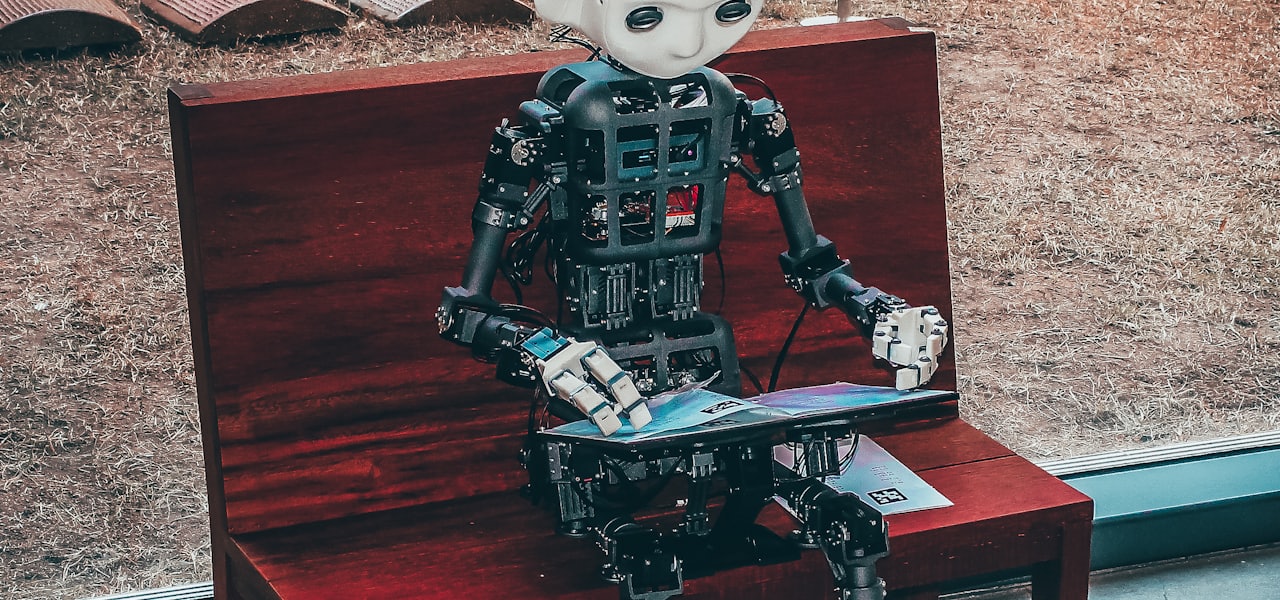
    An integrated test facility (ITF) creates a fictitious entity in a database to process test transactions simultaneously with live input. ITF can be used to incorporate test transactions into a normal production run of a system. Its advantage is that periodic testing does not require separate test processes. However, careful planning is necessary, and test data must be isolated from production data. Moreover, ITF validates the correct operation of a transaction in an application, but it does not ensure that a system is being operated correctly. Integrated test facility is considered a useful audit tool during an IT audit because it uses the same programs to compare processing using independently calculated data. This involves setting up dummy entities on an application system and processing test or production data against the entity as a means of verifying processing accuracy.

    Read more →
  • Kuki AI

    Kuki AI

    Kuki is an embodied AI bot designed for usage in the metaverse. Formerly known as Mitsuku, Kuki is a chatbot created from the Pandorabots framework. The bot has won the Loebner Prize 5 times. == Features == Kuki claims to be an 18-year-old female chatbot from the Metaverse, and the developers have stated she has been worked on since 2005. Early work by one of the company's co-founders inspired the Spike Jonze movie Her. As of 2015, she conversed, on average, in excess of a quarter of a million times daily, and it was estimated 5 million unique users had interacted with her between 2016 and 2020. == Virtual talent, model, and influencer == Kuki has appeared as a Virtual Model in Vogue Business and at Crypto Fashion Week where she modelled NFTs and spoke about the future of digital fashion. In 2021, Kuki modelled five digital looks from emerging Vogue Talents designers for Italian Vogue, that sold out as NFTs in under an hour. Kuki has also modeled for H&M on Instagram in a digital campaign that resulted in an "11x increase in ad recall" per a case study by Meta. == Awards == As of 2019, Kuki had been awarded the Loebner Prize five times, more than any other entrant. In 2020, Kuki competed against Facebook AI's Blenderbot in a 24/7 verbal sparring match called "Bot Battle", winning 79% of the audience vote.

    Read more →
  • Latent semantic mapping

    Latent semantic mapping

    Latent semantic mapping (LSM) is a data-driven framework to model globally meaningful relationships implicit in large volumes of (often textual) data. It is a generalization of latent semantic analysis. In information retrieval, LSA enables retrieval on the basis of conceptual content, instead of merely matching words between queries and documents. LSM was derived from earlier work on latent semantic analysis. There are 3 main characteristics of latent semantic analysis: Discrete entities, usually in the form of words and documents, are mapped onto continuous vectors, the mapping involves a form of global correlation pattern, and dimensionality reduction is an important aspect of the analysis process. These constitute generic properties, and have been identified as potentially useful in a variety of different contexts. This usefulness has encouraged great interest in LSM. The intended product of latent semantic mapping, is a data-driven framework for modeling relationships in large volumes of data. Mac OS X v10.5 and later includes a framework implementing latent semantic mapping.

    Read more →